
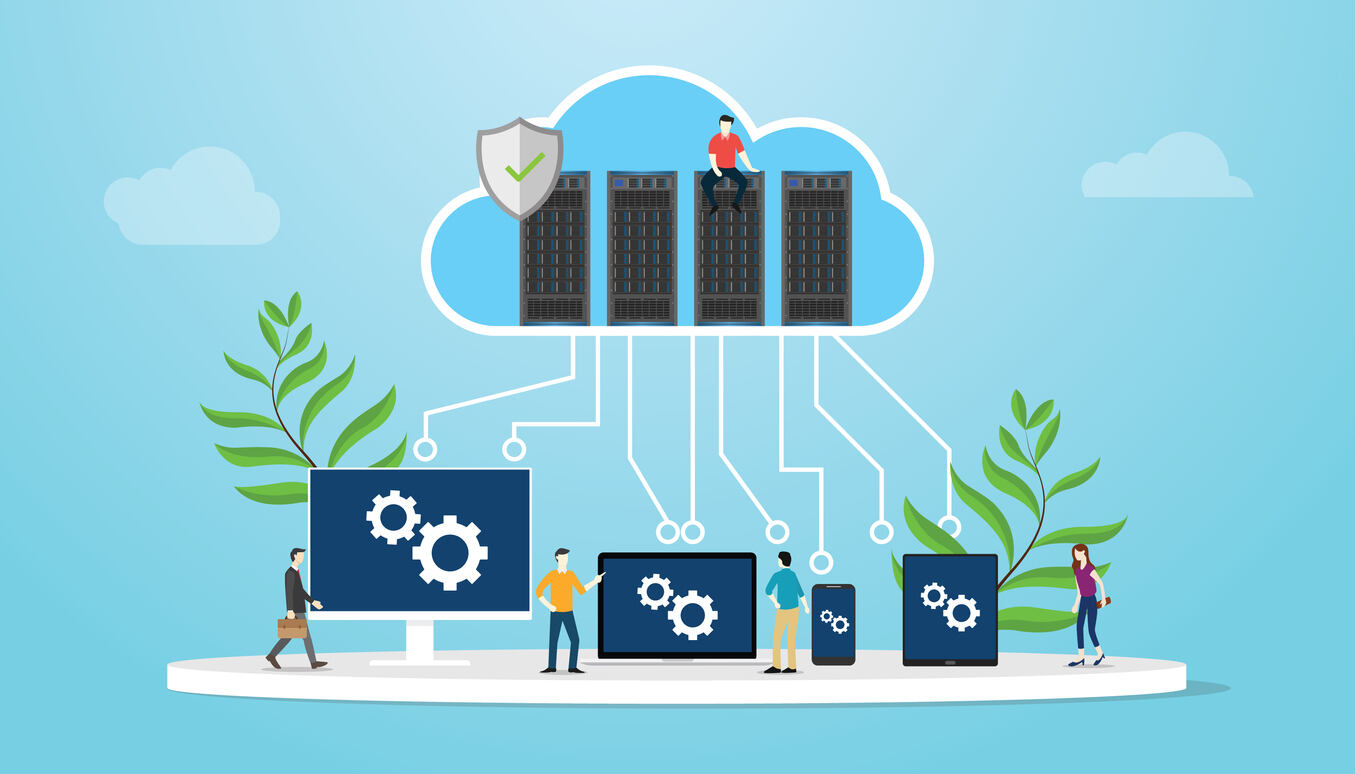
The line between storing data and managing data has blurred. For developers, startup founders, and IT managers in Nigeria’s booming tech ecosystem, choosing the right infrastructure is no longer just a technical decision it is a financial one. With the rise of AI-driven applications and the NCC's new data policies and guidelines, understanding the difference between a Cloud Database and Cloud Storage is critical.
At AllFileTypeConverter.com, we handle massive streams of unstructured data daily. Whether you are converting a 100MB PDF or a batch of RAW images, that data has to live somewhere before and after processing. Here is the definitive guide on what to know about modern cloud data storage.
Cloud Storage. The Digital Warehouse
Cloud Storage (Object Storage) is designed for unstructured data. Think of it as a massive, infinite hard drive in the sky. In 2026, the industry standard has moved toward Intelligent Tiering, where the storage system automatically moves your files between Hot, Cool, and Archive zones based on how often you access them.
Key Use Cases in 2026
- Media Assets: Storing high-resolution videos, 4K images, and audio files.
- Backups and Disaster Recovery: Storing snapshots of your entire system.
- Data Lakes: Storing raw data that hasn't been processed yet for AI training.
Top Providers for 2026:
- Amazon S3 (Simple Storage Service): Still the gold standard for durability.
- Google Cloud Storage: Optimized for high-speed AI integration.
- Microsoft Azure Blob Storage: The preferred choice for Windows-heavy enterprise environments.
- Local Options: Providers like MainOne and Rack Centre in Lagos are increasingly popular for businesses needing local data residency to comply with Nigerian data protection laws (NDPR).
Cloud Databases: The Digital Librarian
Unlike storage, a Cloud Database is for structured or semi-structured data. It doesn’t just hold the data; it organizes it so you can search, filter, and update it in milliseconds.
The 2026 Shift. Serverless and Vector Databases
The two biggest trends this year are:
- Serverless Databases (e.g., Amazon Aurora Serverless, MongoDB Atlas): You no longer rent a server. The database scales up when users are active and scales to zero when they aren't. This is a game-changer for Nigerian startups looking to save on dollar-denominated cloud costs.
- Vector Databases (e.g., Pinecone, Weaviate): These are essential for AI. They store data as embeddings (mathematical vectors), allowing AI agents to perform semantic searches finding information based on meaning rather than just keywords.
The Data Gravity Problem in Nigeria
In 2026, Nigerian tech firms are facing a challenge called Data Gravity. As your database grows larger, it becomes harder and more expensive to move it between providers (e.g., moving from AWS to Google Cloud).
The 2026 Strategy: Many Nigerian firms are adopting a Hybrid Cloud approach. They keep sensitive customer PII (Personally Identifiable Information) on local servers in Lagos or Abuja to satisfy regulators, while using global cloud storage (like S3) for non-sensitive media assets to take advantage of global Content Delivery Networks (CDNs).
Security: Protecting the Crown Jewels
Data breaches in 2026 are often targeted at the storage layer, specifically misconfigured Public Buckets.
Security Checklist for 2026:
- Encryption at Rest: Ensure your provider encrypts your data before it hits the disk.
- IAM Roles: Never use Root keys. Use short-lived, scoped-down permissions for your apps.
- Zero-Knowledge Proofs: For high-security apps, use client-side encryption where even the cloud provider cannot see your data.
How File Conversion Impacts Your Storage Costs
One of the most overlooked ways to save money on cloud bills is File Optimization. If your users are uploading 10MB PNG images to your cloud storage, and you have 100,000 users, your storage bill will skyrocket.
This is where AllFileTypeConverter.com adds massive value to your workflow:
- Storage Compression: By converting heavy formats like TIFF or PNG into WebP or AVIF before they reach your cloud storage, you can reduce your monthly storage bill by up to 40%.
- Database Cleanliness: Converting messy Excel files or CSVs into a standardized format before importing them into your SQL database prevents data corruption and keeps your queries running fast.
- PDF Flattening: For legal and logistics apps, flattening PDFs before storage removes hidden layers that take up space and pose security risks.
Conclusion: Building for 2026 and Beyond
The most successful applications of 2026 are those that treat data as their most valuable asset. By using Cloud Storage for your heavy lifting and Cloud Databases for your intelligence, you create a scalable, secure, and cost-effective foundation.
Whether you are building the next big Fintech in Lagos or a global SaaS platform, remember that the quality of your data starts with how you prepare it. Use AllFileTypeConverter.com to ensure your files are always optimized, secure, and ready for the cloud.
References & Authority Links
AWS Whitepaper (2026): Modern Data Architecture on AWS
NITDA Nigeria: Nigeria Data Protection Act 2023 & 2026 Updates
MongoDB Engineering Blog: The Rise of Vector Databases for AI
Google Cloud: Cost Optimization for Cloud Storage