
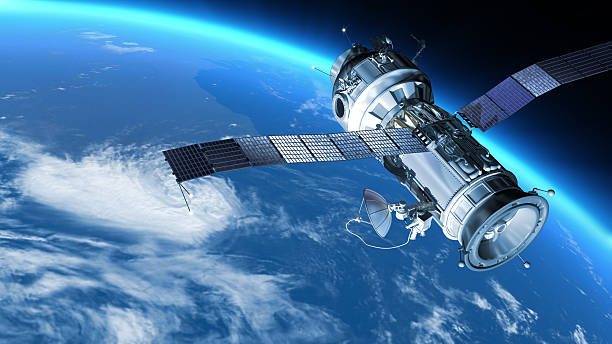
2026 has officially become the Year of the Moon. The global space sector is no longer just about launching satellites, it is now about establishing a permanent human presence in deep space and moving our digital infrastructure into orbit. From NASA’s historic crewed lunar updates to the emergence of the first orbital AI data centers, space technology is evolving faster than ever before.
For users of AllFileTypeConverter.com, staying ahead of these trends is vital. Whether you are a researcher converting satellite data (KML/GeoTIFF) or a tech enthusiast following the latest SpaceX launches, Listed below is the state of space technology today.
1. Artemis II Mission.
The biggest breaking news this month centers on NASA’s Artemis II mission. After a brief delay earlier this month due to a minor hydrogen leak during a wet dress rehearsal, NASA has officially confirmed a new launch window targeting early March 2026.
The Mission Profile
Artemis II will be the first time humans have traveled to the lunar vicinity in over 50 years. The crew Commander Reid Wiseman, Pilot Victor Glover, and Mission Specialists Christina Koch and Jeremy Hansen are currently in pre-flight quarantine. Unlike the Apollo missions, Artemis II is a free return trajectory flyby. The Orion spacecraft will loop around the far side of the Moon, carrying humans farther from Earth than ever before.
The mission is a rigorous test of the Space Launch System (SLS) and the Orion Life Support Systems. In 2026, these systems are equipped with advanced AI-driven radiation monitoring and self-healing thermal shields. For the first time, we will see real-time 4K video streamed from the lunar far side, a feat made possible by the new Optical Laser Communication arrays installed on the spacecraft.
2. The Rise of AI data centers in space and Orbita Cloud.
Perhaps the most futuristic trend of 2026 is the migration of heavy computing from Earth to orbit. This week, SpaceX announced that its Starlink V3 satellites are now being launched with integrated AI compute modules.
Why Move AI to Space?
- Unlimited Solar Energy: Terrestrial data centers consume massive amounts of electricity. In space, solar power is constant and more intense.
- Passive Cooling: The vacuum of space provides a natural heat sink for high-performance GPUs, reducing the need for expensive cooling infrastructure.
- Low Latency Edge Computing: By processing satellite imagery directly in orbit using Nvidia-powered onboard chips, companies like Starcloud can send processed insights (like wildfire alerts) to Earth in milliseconds, rather than sending raw terabytes of data for processing on the ground.
At AllFileTypeConverter.com, we recognize that as data processing moves to the Edge (whether in space or on mobile), the need for lightweight, optimized file formats becomes critical. The shift to orbital AI is driving a new demand for hyper-compressed data formats that can traverse satellite links without lag.
3. Direct-to-Device (D2D). The End of No Signal
2026 is the year the dead zone officially died. The launch of Amazon’s Project Kuiper satellites this month, combined with SpaceX’s Direct-to-Cell rollout, means that standard smartphones can now connect directly to satellites.
The Competition: Amazon vs. SpaceX vs. Starlink
SpaceX/Starlink: Already providing text and basic data services to T-Mobile users in the US and Airtel users in Nigeria.
Amazon Project Kuiper: Under FCC requirements, Amazon is currently deploying half of its constellation. Their 2026 focus is on High-Bandwidth D2D, aiming to provide video-call capabilities via satellite by the end of the year.
AST SpaceMobile: This week, Blue Origin’s New Glenn rocket is scheduled to launch the next generation of BlueBird satellites, which feature the largest commercial communications arrays ever deployed in Low Earth Orbit (LEO).
4. Space Manufacturing. The Mini-Factory Boom
In February 2026, we are seeing the first commercial space-made products hitting the market. Companies like Varda Space Industries are successfully de-orbiting capsules containing pharmaceuticals and semiconductors grown in microgravity.
Why microgravity?
Without the interference of Earth’s gravity, crystals (used in medicine) and fiber optics (like ZBLAN) grow with near-perfect molecular structures. These materials are 10x more efficient than those made on Earth. The technology behind re-entry capsules has become so reliable in 2026 that space manufacturing is now considered a viable investment for venture capitalists.
5. Security in the Final Frontier: The Zero-Trust Space
With so much critical data moving through orbit, Space Cybersecurity has become a top-tier vulnerability concern. The NCC in Nigeria and NASA in the US have both issued new guidelines for Zero-Trust satellite communication.
As we discussed in our recent post on Web App Vulnerabilities, the same principles apply to space:
- Encrypted Telemetry: Satellites must now use Post-Quantum Cryptography to prevent hijacking by ground-based hackers.
- Sanitized Data Streams: Because satellites act as relays, every file sent through an orbital link must be sanitized. This is why tools like AllFileTypeConverter are essential—by converting a file, you strip away potentially malicious scripts hidden in the original code.
Summary of Space Tech Trends (February 2026)
Trend | Current Status | Key Players |
Lunar Exploration | Artemis II preparing for March Launch | NASA, SpaceX, ESA |
Orbital AI | First AI models trained in orbit | Nvidia, SpaceX, Google |
Connectivity | Direct-to-Device (D2D) mobile coverage | Amazon Kuiper, Starlink, AST |
Manufacturing | Microgravity pharmaceutical production | Varda Space, Redwire |
Conclusion: Space is No Longer Just Up There
In 2026, space technology is no longer a distant government project, it is a fundamental part of our global economy. Whether it’s providing 10G internet to a village in Nigeria or manufacturing life-saving drugs in orbit, the Final Frontier is now open for business.
For everyone from data scientists to casual internet users, understanding these shifts is crucial. As space-based data continues to grow, AllFileTypeConverter.com will continue to provide the tools needed to manage, optimize, and secure your digital files for the orbital era.