
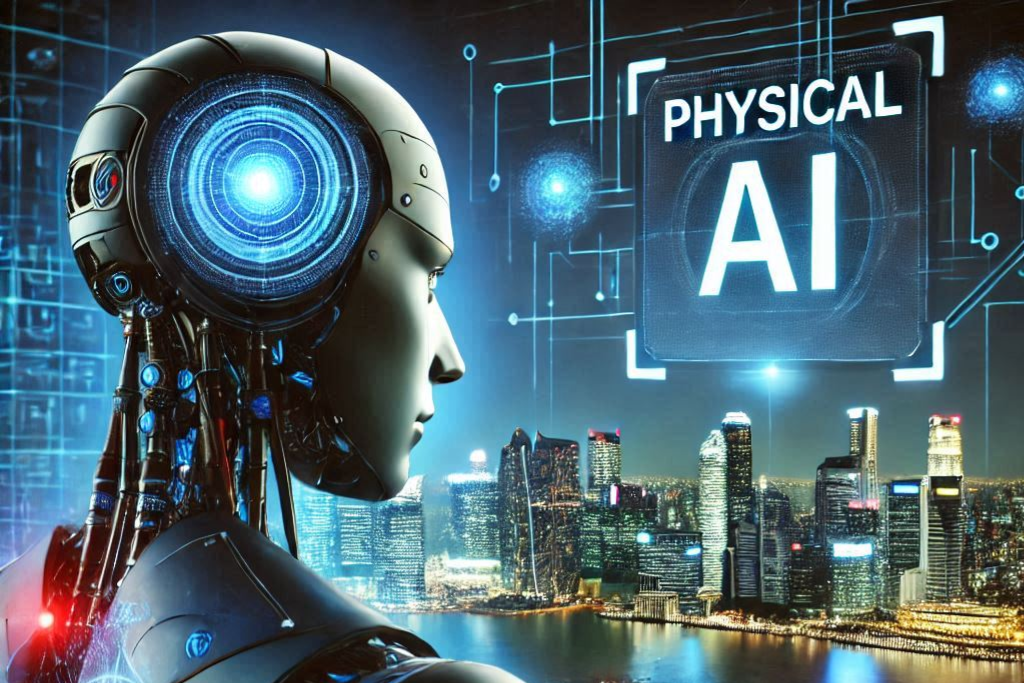
For decades, Artificial Intelligence was embodied only in screens and speakers. But at CES 2026, the world saw the definitive arrival of Physical AI. This is the convergence of Large Language Models (LLMs) with advanced robotics, creating machines that don't just "know" about the world, they can move through it.
Physical AI is the technology that allows a robot to understand a command like Clean up the spill in aisle four without being pre-programmed for that specific location or liquid. It uses computer vision, spatial reasoning, and real-time motor control to adapt to unpredictable human environments.
Key Breakthroughs Driving the Revolution
Three major technological leaps have made 2026 the year of the robot:
Foundation Models for Motion: Much like GPT-4 was trained on the internet’s text, new Vision-Language-Action (VLA) models are being trained on millions of hours of video and robotic telemetry. This allows robots to generalize tasks, learning how to open a door by watching how humans do it.
The Rise of Humanoids: We are seeing the first commercial deployments of humanoid robots in logistics and manufacturing. Companies like Boston Dynamics and Tesla have moved beyond prototypes to Cobots that can work safely alongside humans in warehouses designed for people, not just for machines.
Low-Latency Edge Computing: Physical AI requires instant decision-making. You can't wait for a cloud server to process a stop command when a robot is about to bump into a human. The new generation of AI chips allows these complex models to run locally on the robot with millisecond latency.
The Economic Impact
The goal of Physical AI is not to replace human workers, but to solve the Labor Gap in industries like elder care, construction, and hazardous waste management. By automating the Dull, Dirty, and Dangerous jobs, we allow the human workforce to focus on high-dexterity and high-empathy roles that machines still struggle to master.
Conclusion
We are witnessing the end of the Software-only era. As AI gains a physical presence, the way we build homes, manage hospitals, and run factories will be transformed. Physical AI is the final bridge between our digital dreams and our physical reality.