
The Nigerian telecommunications landscape is currently witnessing its most significant shift since the 5G auctions of 2021. This week, the Nigerian Communications Commission (NCC) officially opened a critical public consultation on the introduction of Satellite Direct-to-Device (D2D) connectivity. This move, led by Executive Vice Chairman Dr. Aminu Maida, isn't just a policy update, it is a strategic attempt to bridge the connectivity blackspots that still isolate over 23 million Nigerians.
Beyond the Landing Permits
While headlines have been dominated by Amazon’s Project Kuiper and BeetleSat securing seven-year landing permits (effective February 2026), the real story lies in the NCC’s new consultation paper. The Commission is currently weighing how to move from allowing satellites to beam signals over Nigeria to allowing them to talk directly to the smartphone in your pocket.
Currently, Nigeria's regulatory framework makes a strict distinction between Space Segment Operators (who own the satellites) and Ground Segment Operators (who serve the end-user). The D2D revolution threatens to blur these lines, and the NCC is now asking stakeholders to help define a new Satellite-to-Phone licensing category.
Why D2D is the Holy Grail for Nigeria.
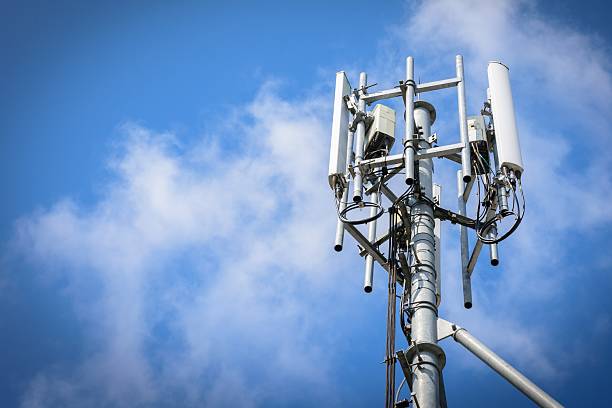
According to the USPF’s 2024 cluster gap study, Nigeria still has 87 clusters where terrestrial towers (MTN, Airtel, Glo) are either physically impossible or commercially unviable to build. Satellite D2D solves this by turning Low Earth Orbit (LEO) satellites into towers in the sky.
The benefits go beyond just coverage.
Network Resilience: During the frequent subsea fiber cuts that plague West Africa, D2D provides a failover that doesn't rely on terrestrial infrastructure.
Emergency Response: In regions facing security challenges or natural disasters, D2D ensures that a no signal screen never stands between a citizen and emergency services.
Economic Inclusion: For Nigeria’s agritech ambitions, D2D enables IoT sensors in remote farms to transmit data without needing a 4G base station nearby.
The Three Licensing Options Under Review.
The NCC’s consultation paper highlights three potential paths for licensing these services:
Option A: The Partnership Model (Spectrum Sharing). This would see satellite giants like SpaceX or Amazon partner with local Mobile Network Operators (MNOs). The satellites would use the MNO's existing terrestrial spectrum (e.g., 700MHz or 800MHz) to provide coverage.
Option B: The Standalone D2D License. A new, dedicated license for satellite companies to operate as mobile service providers in their own right.
Option C: Expanding the UASL/GMPCS Licenses. Amending the existing Unified Access Service Licence to explicitly allow for non-terrestrial signal delivery.
The Amazon vs. Starlink Factor.
The timing of this consultation is no coincidence. With Amazon’s Project Kuiper and BeetleSat-1 now officially authorized to operate in Nigeria starting next month, the monopoly Starlink has enjoyed in the LEO space is over. This competition is expected to drive down the cost of satellite data, which remains a significant barrier for the average Nigerian consumer.
However, the NCC remains cautious. Dr. Maida has emphasized that any new framework must preserve incentives for continued terrestrial network investment. In simpler terms: the NCC doesn't want satellite services to cannibalize the investments made by local telcos who have spent billions on physical towers.
What Happens Next?
The public consultation remains open until February 23, 2026. During this window, industry heavyweights, civil society groups, and tech experts are expected to submit evidence-based input. For the Nigerian tech community, this is a rare opportunity to shape the rules of the game before they are set in stone.
Conclusion
Nigeria is no longer just a consumer of global tech; with this move, it is becoming a regulatory pioneer in the African satellite space. As we move toward the World Radio Communication Conference (WRC-27), the eyes of the continent are on Abuja. If the NCC gets this right, 2026 will be remembered as the year the dead zone died in Nigeria.